
Hydrogen water, structured water, vitalised water, ionisers and water from glass bottles with gemstones: what the sellers promise and what is left of it.
In short
- Hydrogen water: small studies, small effects, and the hydrogen escapes within minutes.
- Structured and vitalised water: not physically detectable.
- Ionisers: expensive devices, for the effect see pH value.
- Gemstones in water: pretty, ineffective, and some stones release substances.
Hydrogen water
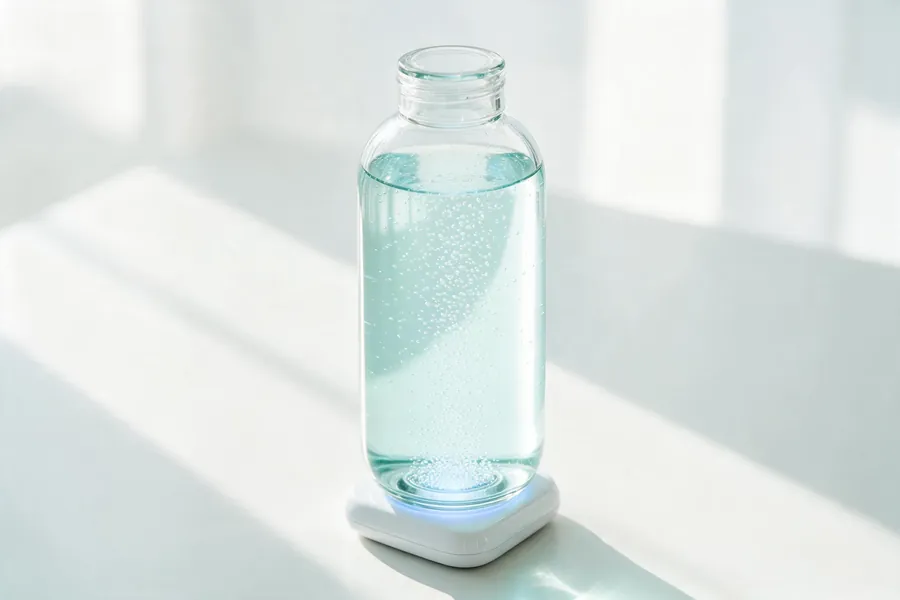
Water in which hydrogen gas is dissolved, sold in cans, pouches or from devices that make it at home. The idea: hydrogen acts as an antioxidant. There are indeed some small studies with effects on inflammation markers and on fatigue during sport. They are short, small, often funded by manufacturers and contradict one another. On top of that, a practical point: hydrogen is the smallest molecule in the world and escapes from open water within minutes. If you want to try it, a glass will do you no harm. If you buy it, you pay a lot for a maybe.
Structured, hexagonal, vitalised water
Water is supposed to gain a better structure through vortices, magnets, gemstones or “information”. Physically, water molecules rearrange themselves constantly, within fractions of a trillionth of a second, and there is no lasting structure in liquid water. No measuring method can tell “vitalised” water from normal water. The devices cost anything from three to four figures, and their effect lies in expectation. That is not nothing, but it is not the water doing it.
Ionisers and alkaline water
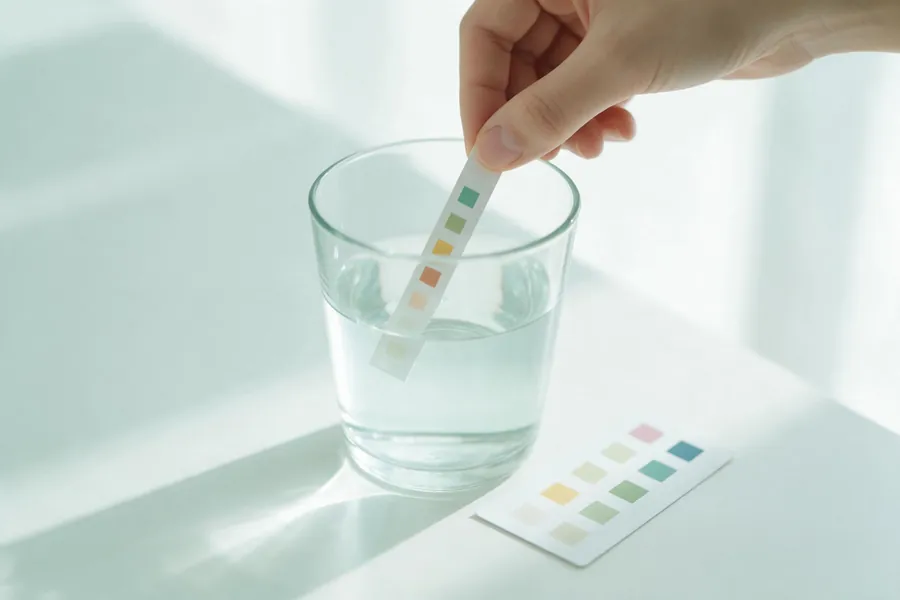
Electric ionisers split tap water into an alkaline and an acidic fraction. The alkaline one is drunk. What the body does with it is explained in pH value and alkaline water: it neutralises it in the stomach. The devices cost 1,000 to 4,000 euros and themselves need a pre-filter.
Gemstones, copper cups, carafes with symbols
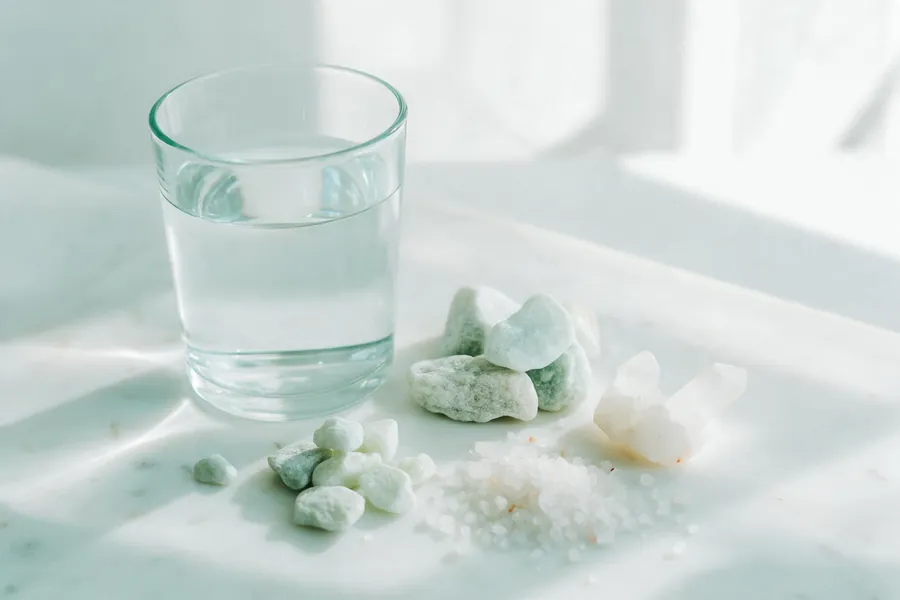
Amethyst, rose quartz and rock crystal in the carafe look lovely and do not change the water. Be careful with stones such as malachite or pyrite, which can release copper and sulphur. Copper cups really do release copper, too much with acidic contents. Harmless for water, but not for lemon water left standing for hours.
What really makes a difference
- Drinking enough, spread over the day.
- A water you like, so that you actually do it.
- Where needed, targeted minerals: magnesium, calcium, sodium, hydrogencarbonate.
- Clean water from sound pipes, filtered if in doubt. How to check that is explained under Water quality.
Everything beyond that is lifestyle. You are welcome to like it, you just should not confuse it with health.
Frequently asked questions
Are there trends that actually help?
Soda makers (less plastic), drinking bottles with markings (more drinking) and filters where a problem has been proven. Unspectacular, but effective.
Are copper bottles healthy?
Copper has an antibacterial effect on the surface, nothing more. As a drinking bottle for water, fine, but not for juice or lemon water.
Share