
Which minerals are in water, how much of them the body actually uses, and whether tap water, mineral water or reverse osmosis water is better on this question.
In short
- The body absorbs calcium and magnesium from water well, much as it does from milk.
- For most people, water contributes less than ten per cent of their mineral intake.
- Hard tap water can supply 100 mg of calcium and 20 mg of magnesium per litre.
- Reverse osmosis water is almost mineral-free, which is not a problem if your diet is sound.
What is dissolved in water
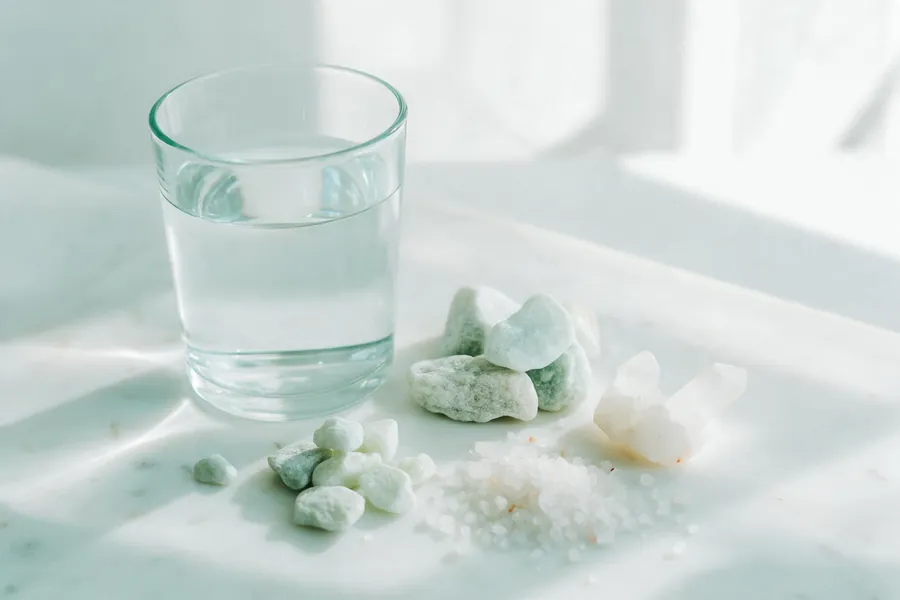
On its way through rock, water dissolves minerals: calcium and magnesium from limestone and dolomite, sodium and chloride from salt layers, hydrogencarbonate (bicarbonate) from carbonate rock, sulphate from gypsum, plus traces of potassium, fluoride, silicon and iron. The mixture determines taste and hardness. A litre of hard tap water from northern Germany can contain 100 to 120 milligrams of calcium, while soft reservoir water from the Ore Mountains (Erzgebirge) contains only 10 to 20.
Does the body absorb minerals from water?
Yes, and quite well. Calcium from water is used about as well as calcium from milk, and magnesium from water even better than from many tablets, because it is dissolved and arrives without accompanying substances. The only question is how much: a litre of calcium-rich mineral water with 400 mg covers half the daily requirement, a litre of reverse osmosis water practically nothing. With an average diet, water supplies less than ten per cent of minerals, and with deliberately chosen mineral water up to a third.
The most important ones at a glance
| Mineral | Daily requirement | Typical in tap water | High in mineral water from |
|---|---|---|---|
| Calcium | 1,000 mg | 20 to 120 mg/l | 150 mg/l |
| Magnesium | 300 to 350 mg | 5 to 30 mg/l | 50 mg/l |
| Sodium | 1,500 mg (requirement), often 3,000+ (intake) | 5 to 40 mg/l | 200 mg/l |
| Potassium | 4,000 mg | 1 to 5 mg/l | rarely relevant |
| Hydrogencarbonate | no requirement, acts as a buffer | 100 to 300 mg/l | 600 mg/l |
| Fluoride | 3 to 4 mg | 0.1 to 0.3 mg/l | 1 mg/l |
Tap water, mineral water, reverse osmosis water
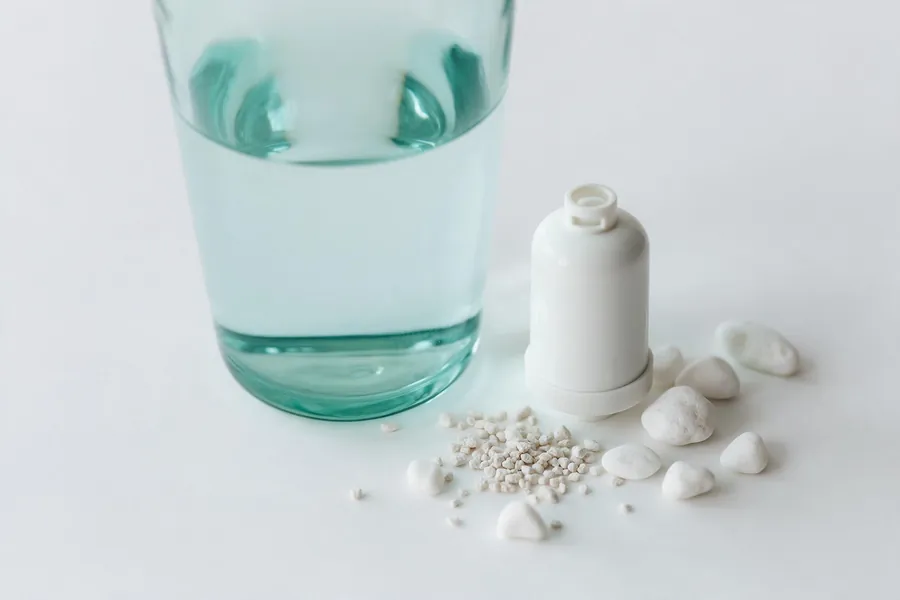
Tap water has, depending on the region, medium to high mineralisation, mostly calcium. Mineral water ranges from very light to very strong, and the label tells you which, see Reading the label. Reverse osmosis water is almost empty. That is not a health problem as long as you eat normally, it just tastes flat. If you like, you can remineralise it, with more on that in Reverse osmosis water and minerals.
When mineral water really helps
With a lot of sport and heat (sodium and magnesium), with lactose intolerance or a vegan diet (calcium), with calf cramps (magnesium) and with heartburn (hydrogencarbonate). In all other cases, the choice between tap and bottle is a question of taste, price and plastic, not of health.
Frequently asked questions
Is distilled or reverse osmosis water dangerous because it “leaches” minerals?
No. This myth comes from experiments with pure water over weeks without food. If you eat, you do not lose minerals through low-mineral water. Only as the sole liquid over a very long time would it be unfavourable.
Is water enough to correct a magnesium deficiency?
A litre of magnesium-rich water with 100 mg/l covers just under a third of the requirement. As one building block, yes, as the sole source, no.
Share