
Reverse osmosis water is almost mineral-free. Whether that is a problem, how it tastes, what remineralisation brings and why aquarists and baristas want exactly this water.
In short
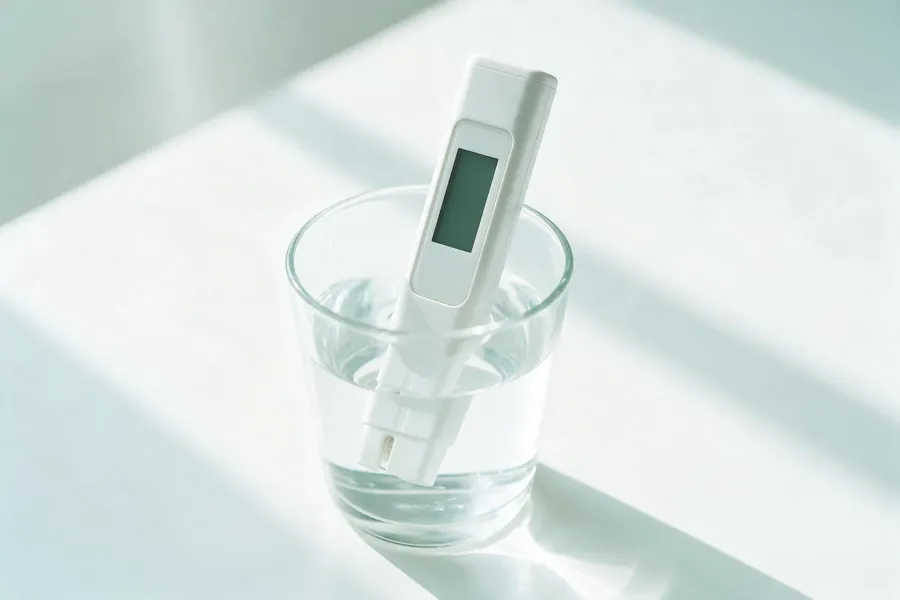
- Reverse osmosis water has a TDS value of 5 to 30 mg/l, tap water 200 to 600.
- Harmless for health if you eat normally; over 90 per cent of minerals come from food.
- Remineralisation cartridges with calcite and magnesium improve taste and pH.
- For coffee, tea, aquariums and steam appliances, defined water is the advantage.
What is missing in reverse osmosis water
The membrane holds back 95 to 99 per cent of calcium, magnesium, sodium, hydrogencarbonate and all other dissolved substances. A tap water with 400 mg/l total mineralisation becomes a pure water with 5 to 30 mg/l. That is less than in any natural mineral water and close to distilled water.
Is that unhealthy?
No, as long as you eat. The body covers over 90 per cent of its requirement for calcium, magnesium and sodium from food. The often-cited WHO report on “demineralised water” refers to populations that drink only desalinated seawater for years and eat a one-sided diet. In a German household with vegetables, dairy products, wholegrain and nuts, water plays a minor role in mineral supply. Anyone who has so far used magnesium-rich mineral water as a supplement should keep that in mind, however. Details in the article Minerals in water.
How it tastes
Flat, soft, “like nothing”. Some find that pure, others empty. The pH is often slightly below 7, because dissolved carbon dioxide is no longer buffered. For tea and coffee that cuts both ways: water that is too soft extracts sour and thin, which is why baristas deliberately blend minerals into reverse osmosis water to reach 50 to 150 mg/l.
Remineralisation
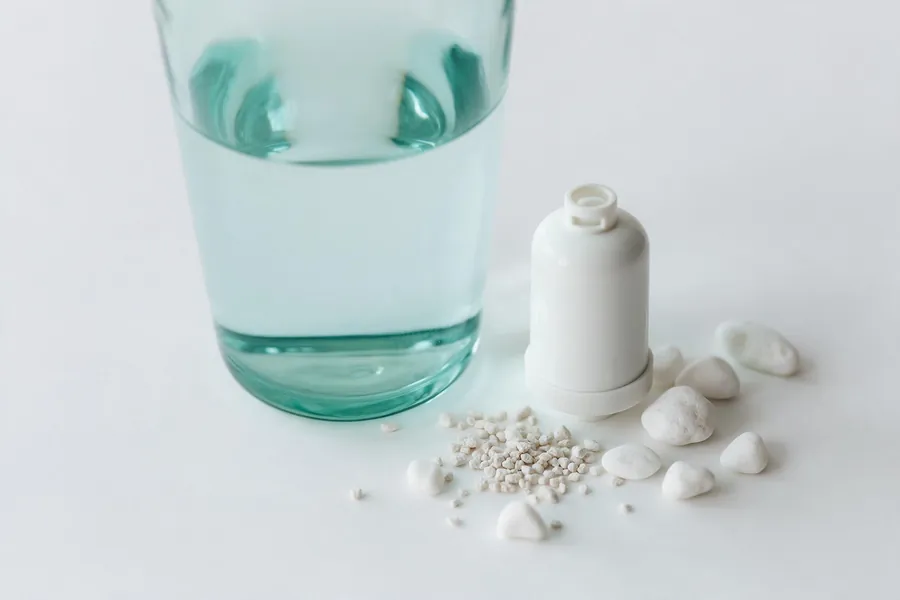
A cartridge with calcite (calcium carbonate) and magnesium oxide or dolomite, which sits after the membrane. As it flows through, the water dissolves a few milligrams of minerals, the pH rises to 7 to 8, and the taste becomes rounder. Values are typically 30 to 80 mg/l total mineralisation, far below tap water but enough for taste. Cartridges last six to twelve months and cost 20 to 50 euros. Alternatively: a pinch of mineral salt for reverse osmosis water, as used in aquaristics and the coffee scene.
Where mineral-free water is an advantage
- Coffee and tea: Defined hardness through your own remineralising, and no limescale rings in the machine.
- Aquarium: Starting water without nitrate and phosphate, which is then set exactly to suit the fish.
- Steam iron, humidifier, bean-to-cup coffee machine: No limescale, no white deposits.
- Baby food: Without nitrate, lead and uranium, but always fresh and, in the first months, boiled.
Try it out
Hardness converterConvert °dH, °fH, °e, mmol/l and ppm into one another and read off the hardness range and descaling interval.Reverse osmosis calculatorSystem, filters and wastewater against bottled water: cost per litre and payback in months.Frequently asked questions
Can I mix reverse osmosis water with mineral water?
Yes, one part mineral water to three parts reverse osmosis water gives a lightly mineralised, good-tasting water. Fiddly, but it works.
Does reverse osmosis water leach the body?
No. That is a myth from experiments without food. If you eat, you do not lose minerals through soft water.
Share