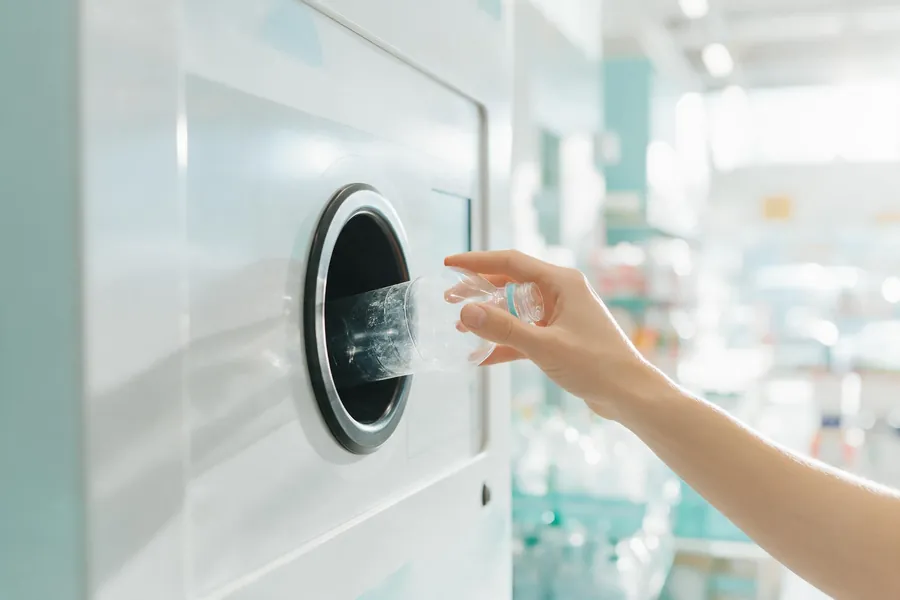

Germany charges a refundable deposit (Pfand): 25 cents on single-use bottles, 8 or 15 cents on reusable ones. How to tell them apart, what happens to the bottles and why the deposit machine is not the end of the story.
In short
- Single-use: 25 cents deposit, logo with bottle and can, gets shredded.
- Reusable (Mehrweg): 8 cents (glass) or 15 cents (PET), “Mehrweg” logo, refilled up to 50 times.
- The return rate for the single-use deposit is over 98 per cent, and over 90 per cent of PET is recycled.
- Recycling is good, refilling is better, no bottle at all is best.
Telling single-use and reusable apart
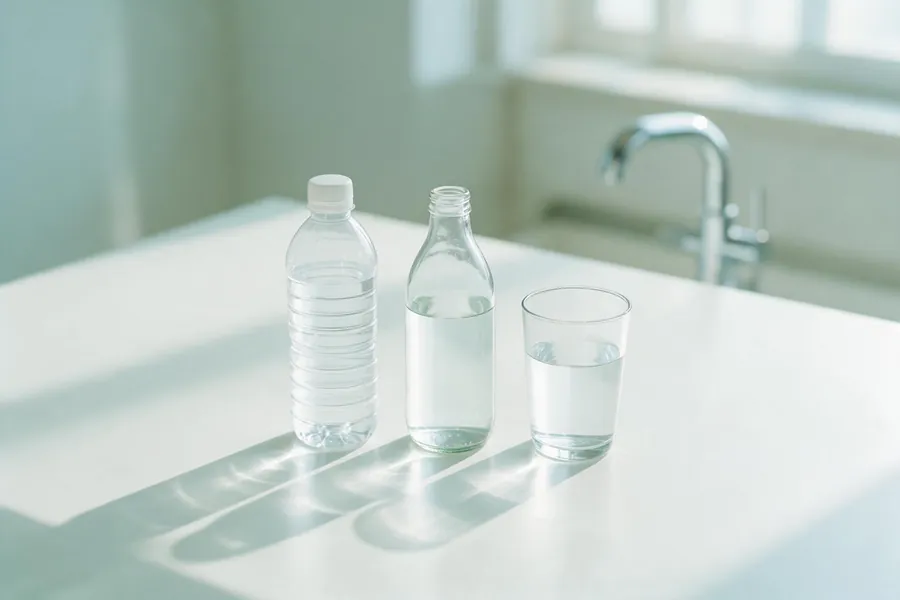
In Germany most drinks bottles and cans carry a refundable deposit (Pfand) that you get back when you return them. The single-use deposit logo (Einwegpfand) shows a bottle and a can with an arrow, usually with “Pfand 0,25 Euro” (deposit 0.25 euros) next to it. Reusable bottles (Mehrweg) carry a “Mehrweg” mark or the logo of the reusable pool and have a deposit of 8 cents (glass) or 15 cents (PET). Since 2023 shops have to label on the shelf what is single-use and what is reusable. The confusion arises because single-use PET has become thicker and reusable PET sometimes looks thin. The deposit amount always gives it away.
What happens to single-use bottles
The machine scans the barcode, crushes the bottle and collects it. The bales go to recyclers, who sort, wash and shred the PET and melt it into granules. These become new bottles (in Germany now to a large extent), films and textile fibres. The return rate is over 98 per cent, the recycling rate over 90 per cent. That is world-class, but it does not change the fact that every litre needs a new bottle.
What happens to reusable bottles
They go back in crates to the bottler, are washed, checked and refilled. Glass bottles manage up to 50 refill cycles, reusable PET about 20. Only after that are they recycled. The shorter the distance between bottler and shop, the better the footprint, see Environmental impact.
What you do with the deposit
- Do not crush bottles, otherwise the machine cannot read the code.
- The deposit is tied to the shop: any shop that sells single-use bottles takes them back, while reusable bottles are taken back only by shops that stock that kind.
- Do not forget the deposit receipt. It expires after three years, but many shops are happy to take it only on the same day.
- Donation button on the machine: the deposit receipt goes to a social project.
What the deposit does not solve
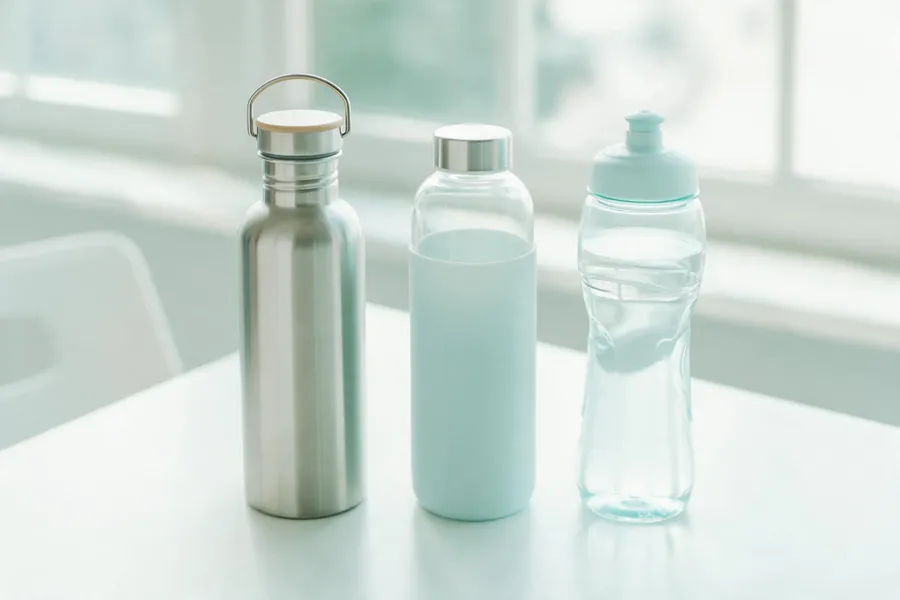
The deposit makes sure bottles come back. It does not reduce the number of bottles. Germany uses over 120 litres of bottled water per head a year, about half of it in single-use bottles. If you want to change that, switch to reusable, to a soda maker or to the tap. The plastic savings calculator shows how many bottles that is in a year.
Frequently asked questions
Why is there no deposit on some bottles?
Juices, milk and some spirits have an exemption, which is being phased out step by step. Since 2024 milk drinks in single-use packaging have also carried a deposit.
Are bottles from abroad free of deposit?
Yes, in the sense that without a German barcode the machine will not accept them. They belong in the yellow bag (the household collection bag for packaging waste) or the glass container.
Share