
Single-use PET, reusable PET, reusable glass, soda maker or tap water: which route causes the fewest emissions, and why the transport distance matters more than the material.
In short
- Tap water: about 0.3 grams of CO2 per litre. Bottled water: 100 to 500 grams, depending on packaging and distance.
- Reusable PET from the region is environmentally better than reusable glass from 500 kilometres away.
- A litre from a soda maker comes to about 20 to 40 grams of CO2, including machine and cylinder.
- Transport decides: glass is heavy, PET is light, and regional beats far away.
The numbers
| Water | CO2 per litre (order of magnitude) | Compared with tap |
|---|---|---|
| Tap water | about 0.3 g | 1x |
| Soda maker with tap water | 20 to 40 g | about 100x |
| Reusable PET, regional (up to 100 km) | 60 to 100 g | about 250x |
| Reusable glass, regional | 90 to 150 g | about 400x |
| Single-use PET, discount store | 150 to 250 g | about 600x |
| Reusable glass, over 500 km | 250 to 400 g | about 1,000x |
| Single-use glass, imported | 400 to 700 g | about 2,000x |
The values come from life cycle assessments by the German Environment Agency (UBA), the Institute for Energy and Environmental Research and consumer organisations, rounded to orders of magnitude. They vary with the number of times the bottles are reused, the lorries and the electricity mix, but the order is stable.
Why glass is not automatically better
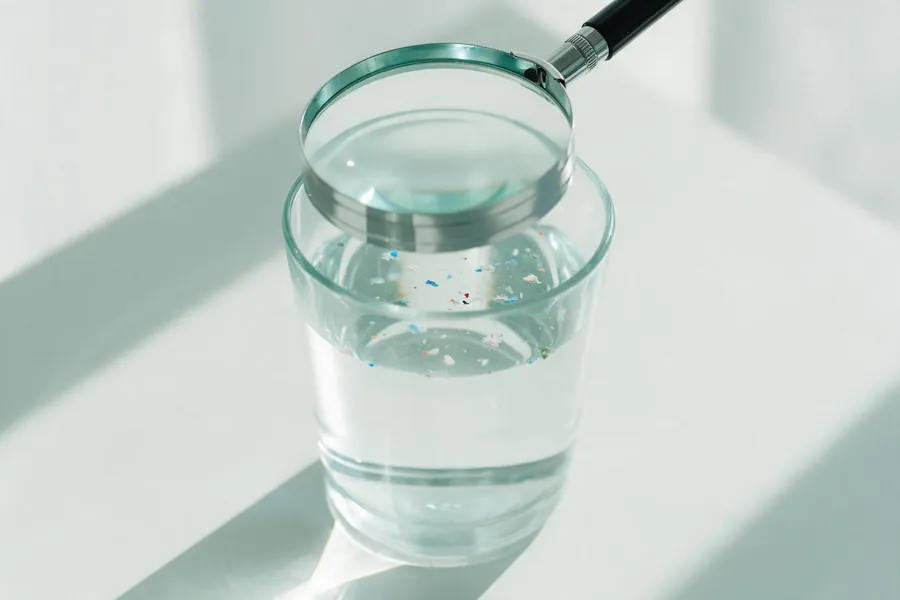
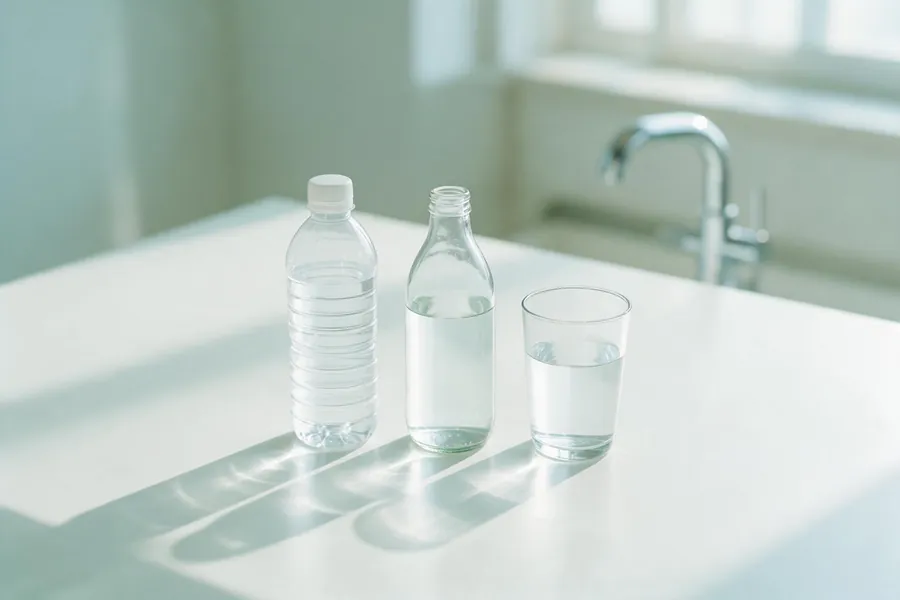
An empty glass bottle weighs 500 to 700 grams, a reusable PET bottle 60 to 100. So a lorry transports either water or glass. Over short distances and with many refill cycles (glass 50, PET 20) this evens out; over long distances PET clearly wins. Glass has the advantage that it releases no microplastics and stays neutral in taste. Environmentally the rule is: regional before material.
Single-use is the loser
Even with deposit and recycling: a single-use bottle is used once, shredded, melted down and turned into a new bottle or fibre. That costs energy with every litre. Reusable bottles are washed and refilled. Both carry a deposit, but their footprints differ. How to tell single-use from reusable is explained in the article Deposit and recycling.
The soda maker in the balance
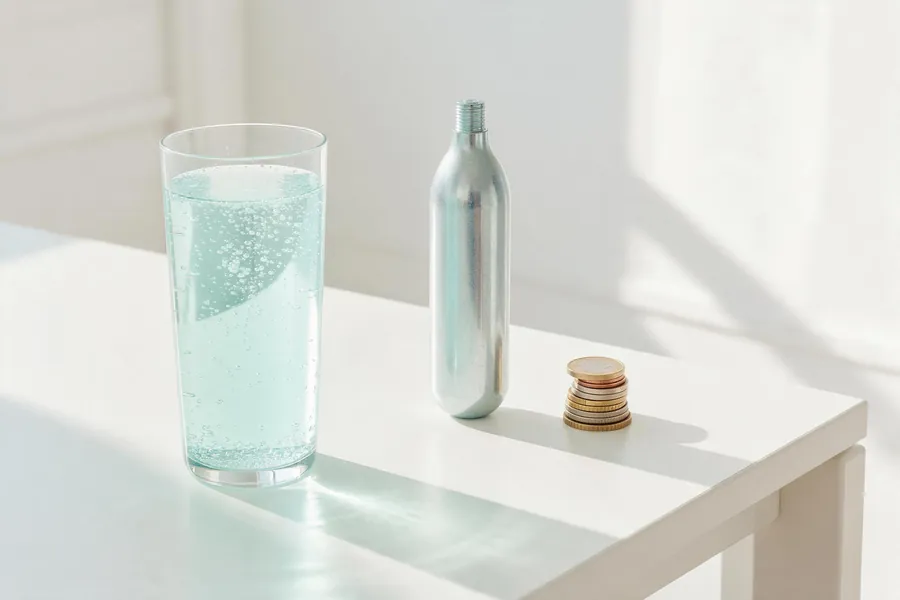
Machine, cylinder, bottles and cylinder transport cause about 20 to 40 grams of CO2 per litre, mainly through the cylinder cycle. That is a tenth of a discount-store single-use bottle. If you fill your own or use large cylinders, you come out even lower. Figures for your household are supplied by the plastic savings calculator.
What speaks for tap water
It comes into the house without a bottle, without a lorry and without a deposit machine, costs half a cent and is strictly controlled in Germany. If you do not like the taste, filter it, chill it or carbonate it. The only real reason for bottles is a targeted supply of minerals, see Tap water vs. mineral water.
Try it out
Plastic savings calculatorHow many bottles, how much plastic, how much money and CO2 you save per year if you switch.Soda maker cost calculatorMachine, cylinder, fizz level: what a litre costs and when the soda maker pays for itself.Frequently asked questions
Is recycled PET (rPET) better?
Yes, noticeably: about 30 per cent fewer emissions than new PET. But it remains single-use with single-use logistics. Reusable beats rPET.
What about water in cartons?
Drinks cartons are composites of cardboard, plastic and sometimes aluminium, and hard to recycle. Environmentally they sit between single-use PET and reusable, without a deposit.
Share