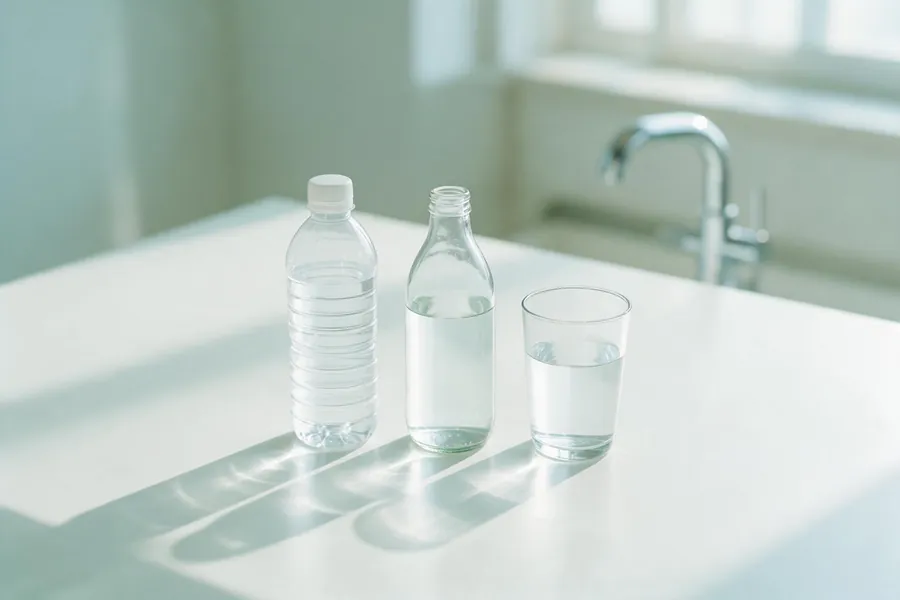

Studies find significantly more plastic particles in bottled water than in tap water. Where they come from, what is known about their effect and how you can lower your intake.
In short
- Bottled water contains on average about 20 times more plastic particles than tap water.
- Sources: the bottle, the closure and the filling process; with glass it is mainly the lid.
- Health effects are not proven, but not ruled out either; research is ongoing.
- Tap water, glass, stainless steel and a reverse osmosis filter lower your intake markedly.
What was found
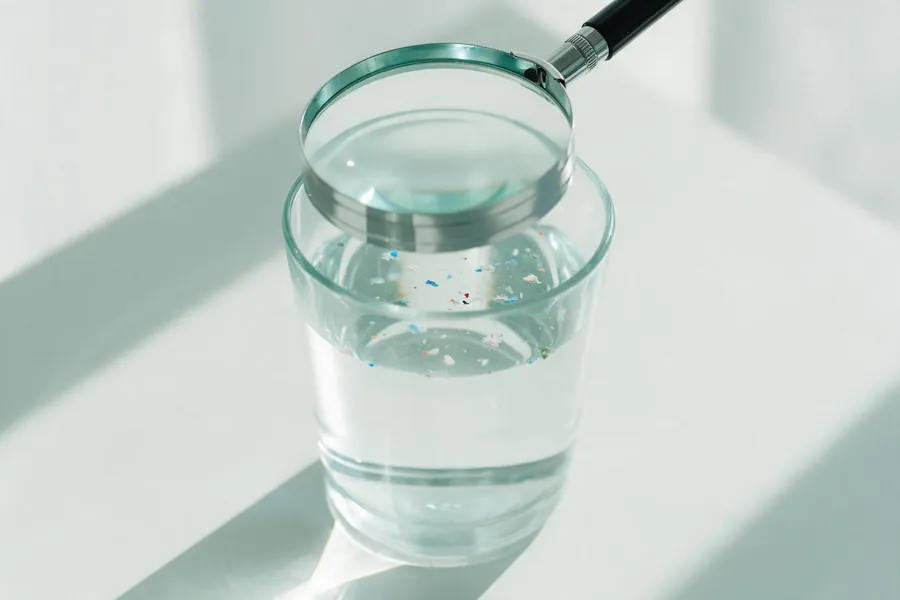
Since 2018, laboratories have been testing bottled water for microplastics, meaning particles under 5 millimetres. A study of water from nine countries found on average around 300 particles per litre, most of them under 100 micrometres. An investigation using new measuring technology even counted around 240,000 particles per litre in 2024, 90 per cent of them nanoplastics under one micrometre. For comparison: in tap water the same methods found on average only a fraction of that, in German studies often fewer than 10 particles per litre.
Where the particles come from
- The bottle itself: PET releases particles during filling, storage and above all with heat and pressure. Sparkling water in PET contains more than still.
- The closure: Plastic rubs off when you screw the cap on and off. That explains why water in glass bottles also contains particles, mostly from the lid.
- The filling: Filters, hoses and seals in the plant.
- The source: With some waters the particles are already in the raw water, in small amounts.
What it means for the body
Honestly: nobody knows exactly. Larger particles are excreted in the stool. Nanoplastics can pass through the intestinal wall and have been detected in blood, placenta, lungs and brain. Whether and how they do harm there is the subject of ongoing research. Inflammatory reactions and the effect of additives such as plasticisers, which cling to the particles, are suspected. So far there is no limit value and no proof of any illness caused by microplastics from drinking water. But there is also no reason to take in more of it than necessary.
How to lower your intake
- Drink tap water: The simplest and most effective measure, because the particle count there is orders of magnitude lower. The prerequisite is sound pipes in the house, see Tap water.
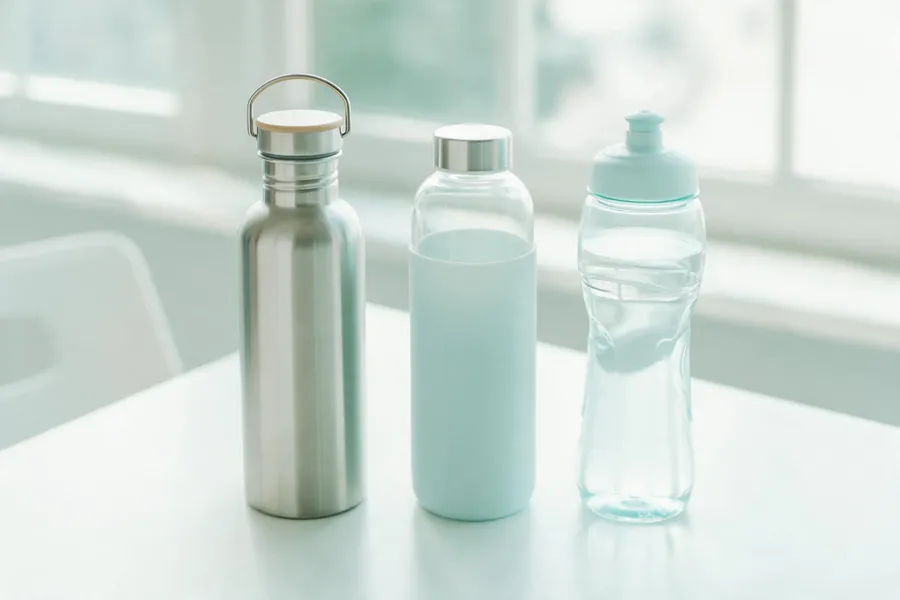
- Glass and stainless steel instead of PET: For on the go and for the soda maker. Lids made of metal where possible.
- No PET bottles in the sun or in the car: Heat multiplies the release.
- Do not carbonate in plastic bottles if glass is possible.
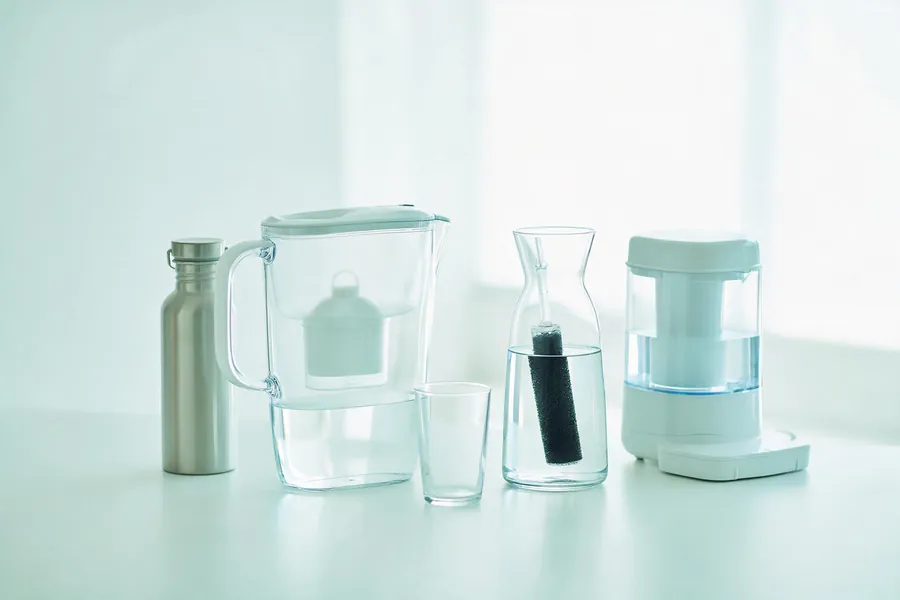
- Filter: Reverse osmosis holds back particles down to the nano range, good activated carbon block and hollow-fibre filters the larger ones. Jug filters only the coarse ones. Details in the article Treating water at home.
And the rest of daily life?
People take in only part of their microplastics through water. More comes from the air (textile fibres, tyre wear), from seafood, salt, beer and from food in plastic packaging, especially if it is heated in it. If you start with water, you have moved the easiest lever.
Try it out
Plastic savings calculatorHow many bottles, how much plastic, how much money and CO2 you save per year if you switch.Reverse osmosis calculatorSystem, filters and wastewater against bottled water: cost per litre and payback in months.Frequently asked questions
Is water in glass bottles free of microplastics?
Not entirely, because of the filling plant and the lid. But markedly lower than PET, and with no increase from heat and storage.
Can I filter microplastics out of water?
Reverse osmosis can, practically completely. Activated carbon block and hollow-fibre filters catch particles above 0.1 to 1 micrometre. Jug filters hardly at all.
Share