
Activated carbon, jug filters, under-sink filters, reverse osmosis, UV: what each method can do, what it cannot do and for which water it makes sense.
In short
- Activated carbon improves taste and smell and holds back chlorine and many organic substances.
- Ion exchangers soften water but change little else.
- Reverse osmosis removes almost everything, including nitrate, lead and medicine residues.
- UV lamps kill germs but filter nothing out.
Do you need a filter at all?
Tap water in Germany is, as a rule, perfectly fine at the tap in your home. There are three reasons to filter anyway: you do not like the taste (chlorine, limescale, metal), your house has old lead or copper pipes, or you want particularly soft or pure water for coffee, tea, an aquarium or baby food. Which reason applies decides the method.
Activated carbon: the taste filter
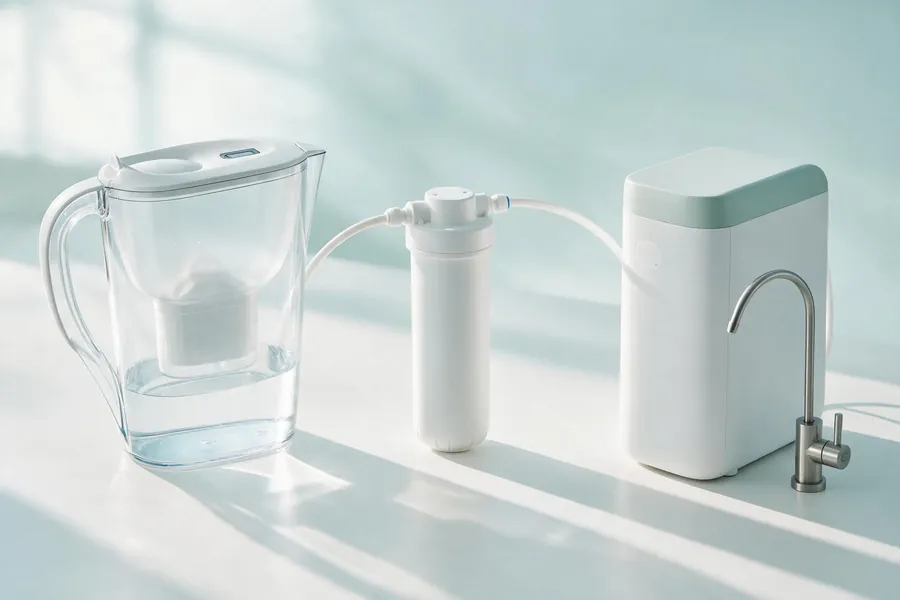
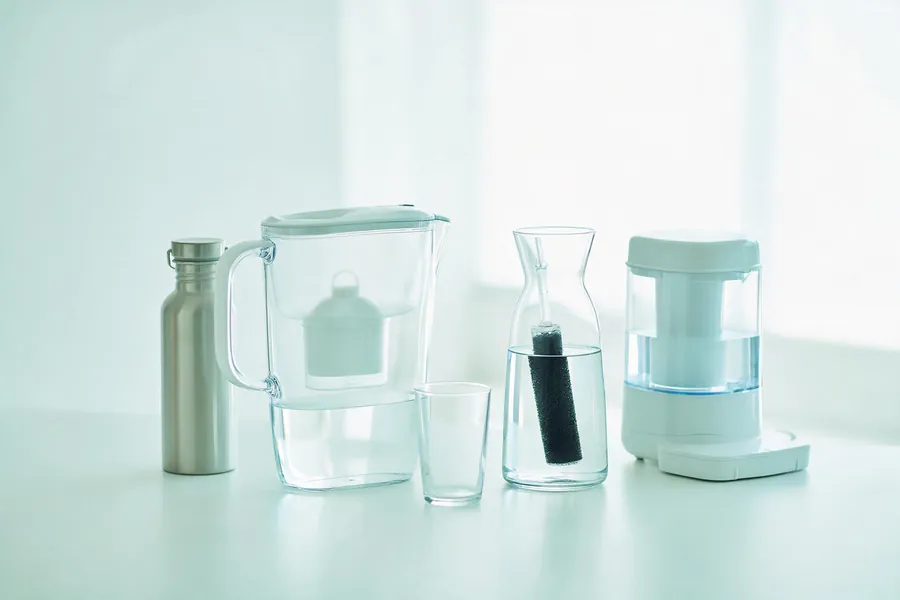
Activated carbon binds chlorine, ozone, many pesticides, solvents and odour compounds. It is found in almost every jug filter and in many under-sink filters. It lets limescale, nitrate and metal ions largely pass through. Regular replacement matters: an exhausted cartridge releases the substances it has bound and becomes a source of germs.
Jug filters with an ion exchanger
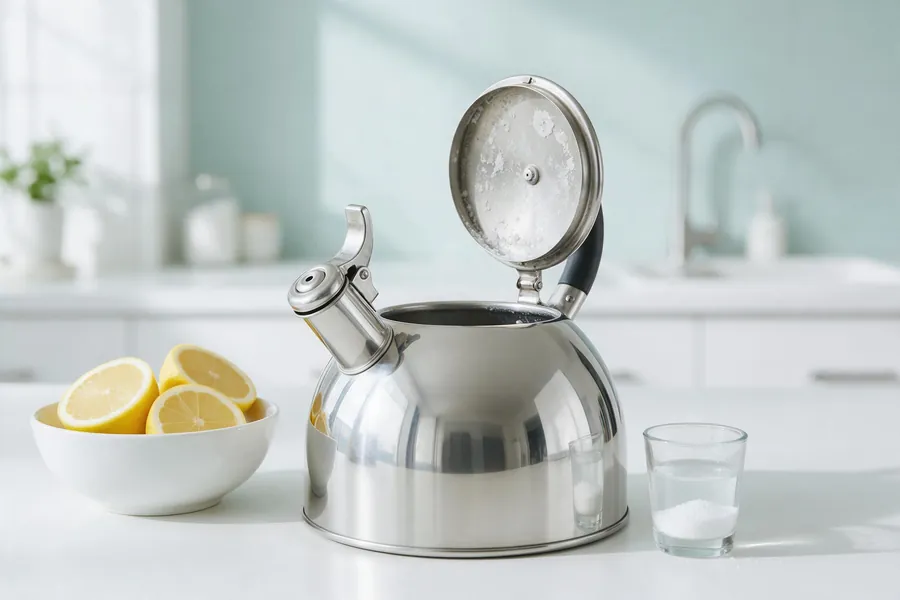
The well-known jugs combine activated carbon with an ion exchanger that swaps calcium and magnesium for sodium or hydrogen. The water becomes softer, and there are fewer limescale deposits in the kettle and coffee machine. The minerals are then missing from the glass, however, and the jug has to be kept cool and given a new cartridge every four weeks.
Under-sink filters
These are fitted in the kitchen cupboard, with their own tap or a three-way tap. They come as pure activated carbon blocks, as ceramic or hollow-fibre filters against germs and particles, and as combinations. They deliver quickly flowing water with no wait and are usually more practical for families than a jug.
Reverse osmosis
The most thorough method: a membrane lets practically only water molecules through. Nitrate, lead, copper, uranium, pesticides, medicine residues, microplastics and limescale are held back at 90 to 99 per cent. The price: the water is then almost mineral-free and tastes “empty”, and depending on the system, one to three litres of waste water flow away per litre of purified water. More in the chapter Reverse osmosis systems.
UV disinfection
A UV lamp destroys the genetic material of bacteria and viruses. It filters nothing out, but makes germs harmless. It is useful with a private well, with rainwater or when travelling, and unnecessary on mains water in Germany.
Which method for which problem
| Problem | Sensible | Not sensible |
|---|---|---|
| Chlorine taste | Activated carbon | UV, ion exchanger |
| Limescale in appliances | Ion exchanger, osmosis | Activated carbon alone, UV |
| Old lead pipes | Osmosis, certified lead filter | Jug filter without proof of lead removal |
| Nitrate from wells | Osmosis, anion exchanger | Activated carbon, UV |
| Germs in wells | UV, hollow fibre, boiling | Activated carbon alone |
Try it out
Hardness converterConvert °dH, °fH, °e, mmol/l and ppm into one another and read off the hardness range and descaling interval.Reverse osmosis calculatorSystem, filters and wastewater against bottled water: cost per litre and payback in months.Frequently asked questions
Do I have to use filtered water quickly?
Yes. Filtered water no longer contains chlorine and is not fresh after a day at room temperature. Keep jugs in the fridge and use under-sink filters daily.
Does a jug filter remove microplastics?
Partly. Coarse particles are caught in the fleece, very fine particles are not. Only reverse osmosis is reliable.
Share