
Citric acid, vinegar or a descaler from the drugstore: what dissolves limescale, what is gentle on appliances and how soft water lets you almost avoid descaling altogether.
In short
- Citric acid is the best remedy: odourless, cheap, gentle on materials.
- Vinegar works, but it smells and attacks rubber seals.
- With hard water descale every four weeks, with soft water every three months.
- A filter or a soda maker with a softening cartridge halves the work.
Why limescale forms
Hard water contains a lot of calcium and magnesium. When heated they precipitate as calcium carbonate and settle as a white crust on the bottom. This is not unhealthy, but the layer insulates, lengthens boiling time, costs electricity and makes heating elements die sooner. In a coffee machine it clogs pipes and changes the taste. How hard your water is is shown by the Hardness converter; the values for your city are under Regions.
Citric acid: the remedy of choice
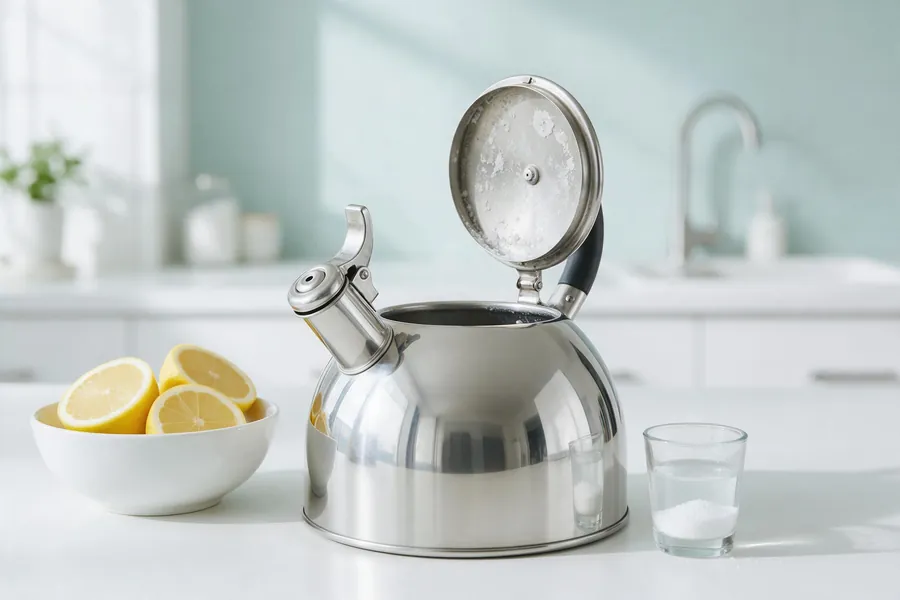
One tablespoon of citric acid powder (about 15 grams) to half a litre of water. Bring it to the boil in the kettle, leave it to work for an hour, pour it out, then boil clear water through twice. Citric acid dissolves limescale reliably, is odourless, attacks neither stainless steel nor seals, and costs only a few euros in a one-kilo bag. For coffee machines, dilute the solution to 2 to 3 per cent and use the descaling programme. Do not boil it, because at very high temperatures and with a lot of limescale, citric acid can form calcium citrate, which dissolves poorly. So in the kettle, bring it to the boil and then leave it to stand, do not simmer it for long.
Vinegar and vinegar essence
Household vinegar mixed 1:1 with water also works, but it smells sharp and attacks rubber, plastic seals and some coatings. It is fine for kettles made of glass or stainless steel, but not recommended for bean-to-cup coffee machines.
Ready-made descalers
These mostly contain citric acid, lactic acid or sulphamic acid. They work quickly and are often prescribed by the manufacturer for bean-to-cup machines so that the warranty applies. The price per use is clearly above that of citric acid powder.
How often to descale?
| Water hardness | Kettle | Coffee machine |
|---|---|---|
| soft (under 8.4 °dH) | every 3 months | every 3 to 4 months |
| medium (8.4 to 14 °dH) | every 6 to 8 weeks | every 2 months |
| hard (over 14 °dH) | every 4 weeks | monthly |
Avoiding limescale instead of removing it
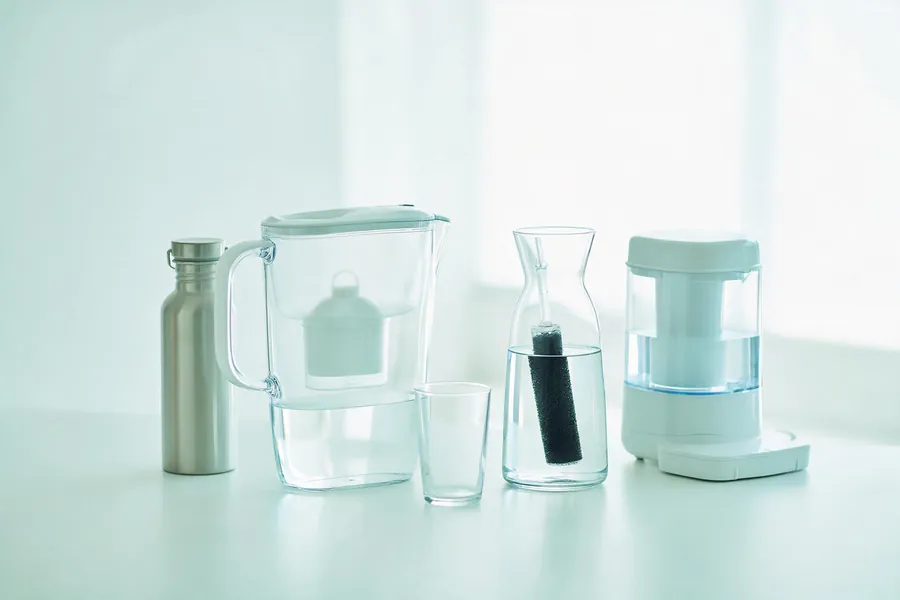
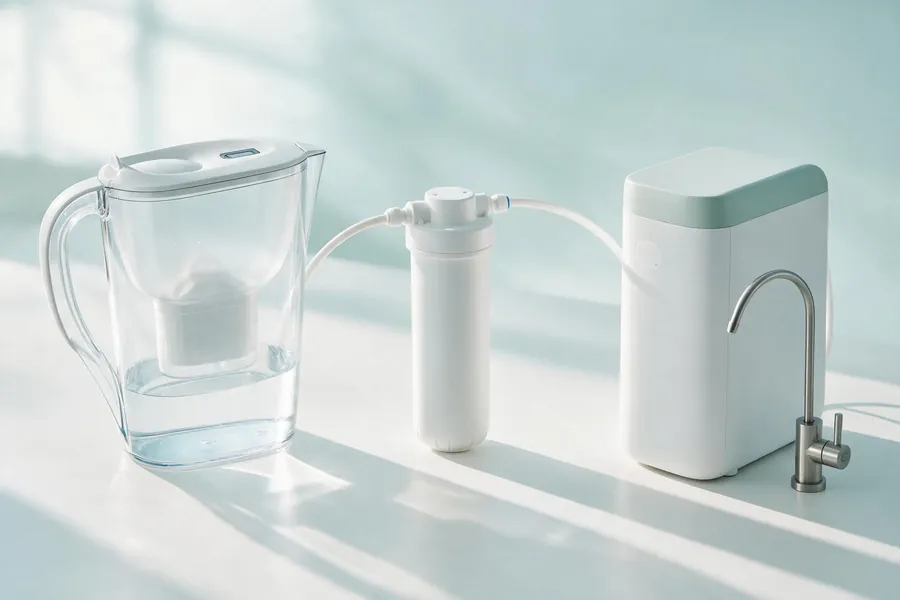
A jug filter with an ion exchanger, a softening cartridge or filtered water from an under-sink filter lowers the hardness considerably. If you only want to protect the kettle, pour away the leftover water after boiling instead of leaving it to stand. Which filters can do this is covered in the Filter comparison.
Frequently asked questions
Is limescale in water unhealthy?
No. Limescale is calcium and magnesium, both minerals that the body needs. Hard water is only an issue for appliances and taste.
Can I use lemon juice instead of the powder?
Yes, but you need a lot of it, about the juice of three lemons to half a litre. The powder is cheaper and works more evenly.
Share