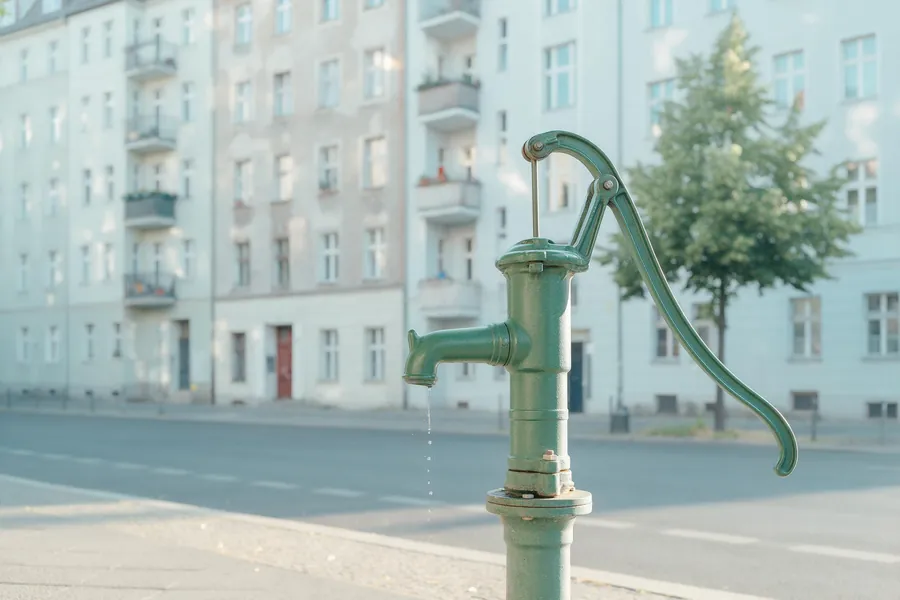

Berlin supplies itself entirely from its own groundwater, which is extracted on the banks of the Spree, the Havel and the lakes. It is hard, very clean and free of chlorine, but limescale in the kettle and the shower is a daily companion.
Water hardness
18.0 °dHhardA lot of calcium and magnesium: good for the body, a nuisance for appliances. Descale regularly and use more detergent. Descale: every 4 weeks.
Aquaviana’s advice
- Descale the kettle and coffee machine every four weeks; citric acid is enough.
- For tea and filter coffee a jug filter is worthwhile, as the water becomes noticeably softer.
- In older buildings from before 1973, ask about lead pipes; Berlin still has some left.
Where the water comes from
Nine waterworks draw groundwater from around 650 wells. A large part of it is bank filtrate: water from the Spree, Havel, Tegeler See and Müggelsee that has seeped through sand and gravel and been cleaned naturally along the way. Treatment is limited to aeration and filtering to remove iron and manganese. Chlorine is not added in normal operation. The route from well to tap is short, and the water arrives at 10 to 14 °C.
Hardness and taste
Berlin water is hard: 14 to 22 °dH depending on the district, around 18 on average (about 320 mg/l CaCO3). That comes from the lime in the Ice Age sands and from the bank filtrate. It tastes full and mineral, and some people find it chalky. Calcium is around 100 to 120 mg/l and magnesium 10 to 15, so one litre covers about ten per cent of your calcium needs. Nitrate is far below the limit, usually under 5 mg/l.
What that means day to day
Limescale is topic number one: kettle, shower screen, coffee machine. If you want very soft water for tea or espresso, use a jug filter or a reverse osmosis system. For your health, the hardness is an advantage. Set the washing machine to “hard”, which avoids detergent dosing mistakes. Berliner Wasserbetriebe publish the analysis values for each waterworks, with a postcode search.
Try it out
Hardness converterConvert °dH, °fH, °e, mmol/l and ppm into one another and read off the hardness range and descaling interval.Tap water checkEight questions about your home, pipes and region, an assessment with a traffic light and next steps.Share