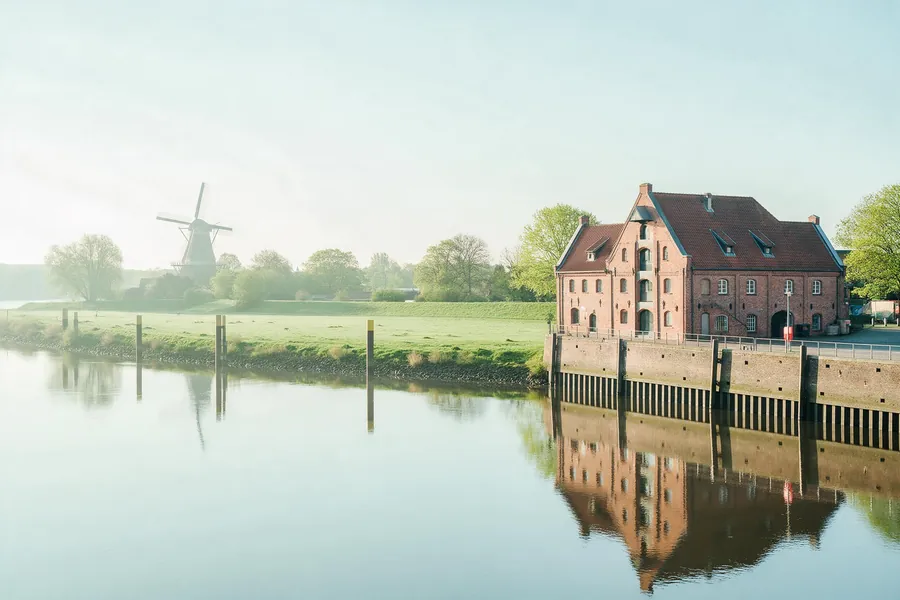


Hamburg draws all of its drinking water from groundwater, some of it 400 metres deep and over a thousand years old. It is medium-hard, very pure and only aerated and filtered.
Water hardness
13.0 °dHmediumThe normal case in many cities: moderate limescale, good taste, normal detergent dosage. Descale: every 6 to 8 weeks.
Aquaviana’s advice
- Hardness is between 10 and 16 °dH depending on the district, softer in the west than in the east.
- Limescale is a mild issue; descaling every six to eight weeks is enough.
- The water is almost free of nitrate and, after boiling, well suited to baby food.
Where the water comes from
Seventeen waterworks in Hamburg and in the surrounding areas of Lower Saxony and Schleswig-Holstein draw groundwater from depths between 30 and 400 metres. The deep water is centuries old and completely shielded from the surface, so it is free of nitrate and pesticides. Treatment removes iron and manganese by aeration and filtering; nothing more happens.
Hardness and taste
Hamburg water is medium-hard to hard, on average 13 °dH (about 230 mg/l CaCO3), with differences between the waterworks: softer in the west and north, harder in the east and south. It tastes neutral and soft, and chlorine is not used. Calcium is 60 to 90 mg/l. Sodium, at 20 to 40 mg/l, is somewhat higher than elsewhere, which is due to the marine subsoil.
What that means day to day
An uncomplicated water: little limescale, no chlorine, good for coffee and tea straight from the tap. Hamburg Wasser offers a hardness look-up by street. If you make espresso, you are already close to the optimum at 10 to 12 °dH. Lead pipes still occasionally exist in older buildings; the company has been replacing its service pipes for years.
Try it out
Hardness converterConvert °dH, °fH, °e, mmol/l and ppm into one another and read off the hardness range and descaling interval.Tap water checkEight questions about your home, pipes and region, an assessment with a traffic light and next steps.Share