
Hanover blends hard groundwater from the Fuhrberger Feld north of the city with very soft reservoir water from the Harz. The result is a mild, medium-hard water whose hardness varies with the mixing ratio.
Water hardness
10.0 °dHmediumThe normal case in many cities: moderate limescale, good taste, normal detergent dosage. Descale: every 6 to 8 weeks.
Aquaviana’s advice
- Hardness is 8 to 15 °dH depending on the district; Enercity shows it by address.
- Harz water from the Granetalsperre is extremely soft at under 3 °dH.
- Descaling every six to eight weeks is enough in most zones.
Where the water comes from
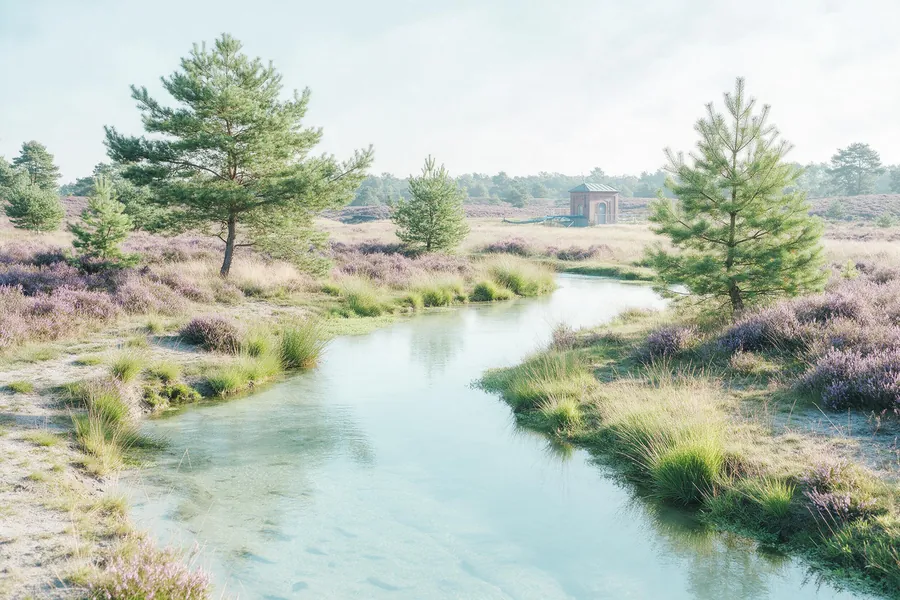
The Fuhrberg waterworks draws groundwater from the heath north of Hanover, an area of sandy soils and pine forest that the city has been protecting together with farmers for decades. Added to this is water from the Harzwasserwerke, from the Granetalsperre and Eckertalsperre reservoirs, which arrives through long-distance pipelines. Both waters are blended in the network, and the Harz share is higher in the south of the city.
Hardness and taste
Fuhrberg groundwater has around 15 °dH, Harz water under 3. Depending on the blend, Hanover’s water is at 8 to 15 °dH, and 10 on average (about 180 mg/l CaCO3). It tastes mild and balanced, and thanks to cooperation with farming, nitrate is under 10 mg/l. Chlorine is not used regularly.
What that means day to day
An easy-care water. In zones with a high Harz share, limescale is hardly an issue; in the north it is a little more of one. It can be used straight from the tap for coffee and tea. Hanover is among the cities with many drinking fountains in the city centre, at the Maschsee and in the parks.
Try it out
Hardness converterConvert °dH, °fH, °e, mmol/l and ppm into one another and read off the hardness range and descaling interval.Tap water checkEight questions about your home, pipes and region, an assessment with a traffic light and next steps.Share