
Reverse osmosis forces water through a membrane that lets almost only water molecules pass. What is left behind, why waste water is produced and what stages a system has.
In short
- The membrane has pores of about 0.0001 micrometres, smaller than viruses, salts and heavy metals.
- Rejection: 90 to 99 per cent for nitrate, lead, copper, uranium, pesticides, drug residues and microplastics.
- Depending on the system, 1 to 3 litres of concentrate flow down the drain per litre of pure water.
- Five stages are usual: sediment, activated carbon, membrane, post-filter, optional remineralisation.
Osmosis and reverse osmosis
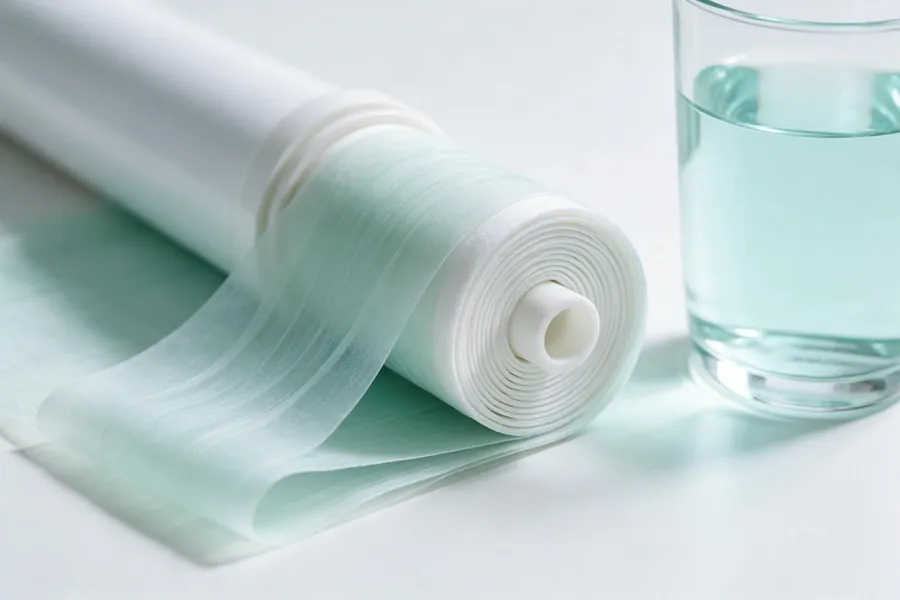
Osmosis is a natural process: if a semi-permeable membrane separates two solutions, water moves from the dilute to the concentrated side until the pressure is balanced. In reverse osmosis this process is turned around with pressure. Tap water is pressed against the membrane at 3 to 8 bar. Water molecules pass through, almost everything else does not. On one side pure water (permeate) is produced, and on the other a concentrate containing the retained substances, which goes down the drain.
What the membrane holds back
The pores of a reverse osmosis membrane are about 0.0001 micrometres across. For comparison: bacteria measure 1 micrometre, viruses 0.02 to 0.4, a dissolved salt ion about 0.0004. That is why the membrane holds back not only particles but dissolved substances:
| Substance | Rejection |
|---|---|
| Nitrate | 85 to 95 per cent |
| Lead, copper, uranium | 95 to 99 per cent |
| Calcium, magnesium (limescale) | 95 to 99 per cent |
| Pesticides, drug residues | 90 to 99 per cent |
| Microplastics, bacteria, viruses | over 99 per cent |
| Chlorine | removed beforehand by the activated carbon, because it damages the membrane |
The stages of a system
- Sediment filter (5 micrometres): holds back sand, rust and suspended matter, and protects everything behind it.
- Activated carbon filter: removes chlorine, chloramines and organic substances. Chlorine would destroy the membrane within months.
- Membrane: the heart of the system. It lasts for years if the pre-filters are changed regularly.
- Post-filter (activated carbon): takes the last flavour compounds out of the tank or the line.
- Remineralisation (optional): returns calcium and magnesium, for taste and pH. More in Reverse osmosis water and minerals.
Why waste water is produced
The retained substances have to go, or the membrane clogs. Part of the water constantly rinses them off and runs down the drain as concentrate. With old tank systems at low mains pressure, that is three to four litres per litre of pure water, and with modern direct-flow systems with a pump, one litre or less. At ten litres of pure water a day, that makes the difference over a year between 3,600 and 14,000 litres of waste water. The Reverse osmosis calculator works out what that costs.
Tank or direct flow
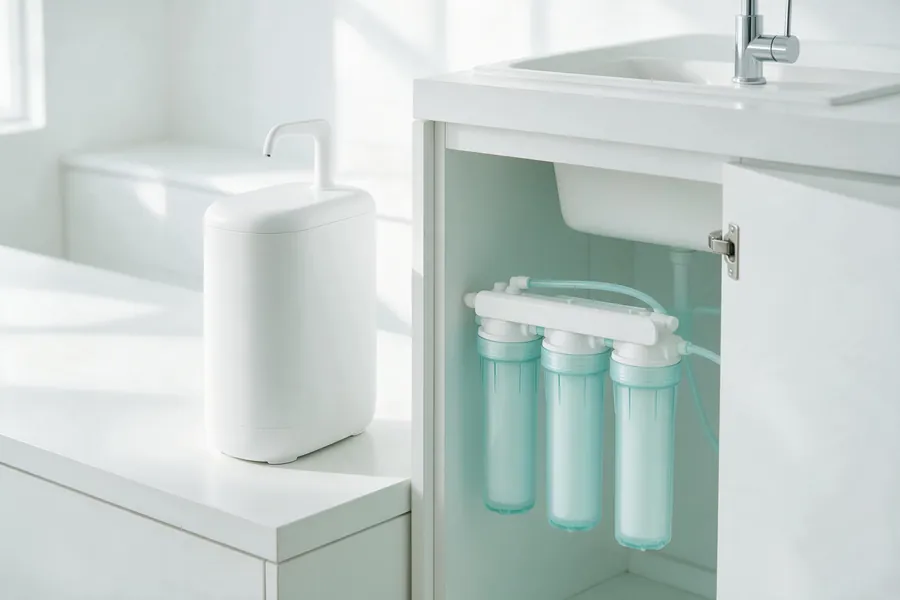
Classic systems slowly fill a storage tank of 8 to 12 litres, from which the tap then dispenses quickly. Direct-flow systems have a pump and a large membrane that deliver water immediately, with no tank and no standing water. They are more expensive, more hygienic and more economical with waste water. Which design suits which situation is covered in Under-sink, countertop or direct flow.
Try it out
Reverse osmosis calculatorSystem, filters and wastewater against bottled water: cost per litre and payback in months.Hardness converterConvert °dH, °fH, °e, mmol/l and ppm into one another and read off the hardness range and descaling interval.Frequently asked questions
Does a reverse osmosis system need electricity?
Tank systems without a pump run on mains pressure alone from about 3 bar. Systems with a pump (direct flow, low pressure) need a socket but use only a few watts.
Is reverse osmosis water sterile?
Directly behind the membrane, practically yes. Germs can settle in the tank and in the line afterwards, which is why post-filters, regular use and maintenance matter.
Share