
A reverse osmosis system is only as good as its upkeep. Which filters are due when, how to check the membrane, how to disinfect the tank and what to do after a holiday.
In short
- Sediment and activated carbon filters every 6 months, post-filter yearly, membrane every 2 to 3 years.
- A TDS meter shows whether the membrane is still working: pure water below 10 per cent of the tap water reading.
- Disinfect the tank and lines once a year.
- After more than a week of standstill, pour away the first litres.
The maintenance plan
| Component | Interval | How you notice |
|---|---|---|
| Sediment filter | every 6 months | filter turns brown, flow drops |
| Activated carbon pre-filter | every 6 months | no visible sign, so go by the calendar |
| Membrane | every 2 to 3 years | TDS of the pure water rises above 10 per cent of the tap water reading |
| Post-filter | yearly | water tastes musty |
| Remineralisation | 6 to 12 months | water tastes flat again |
| Tank, hoses | disinfect yearly | smell, biofilm |
Checking the membrane
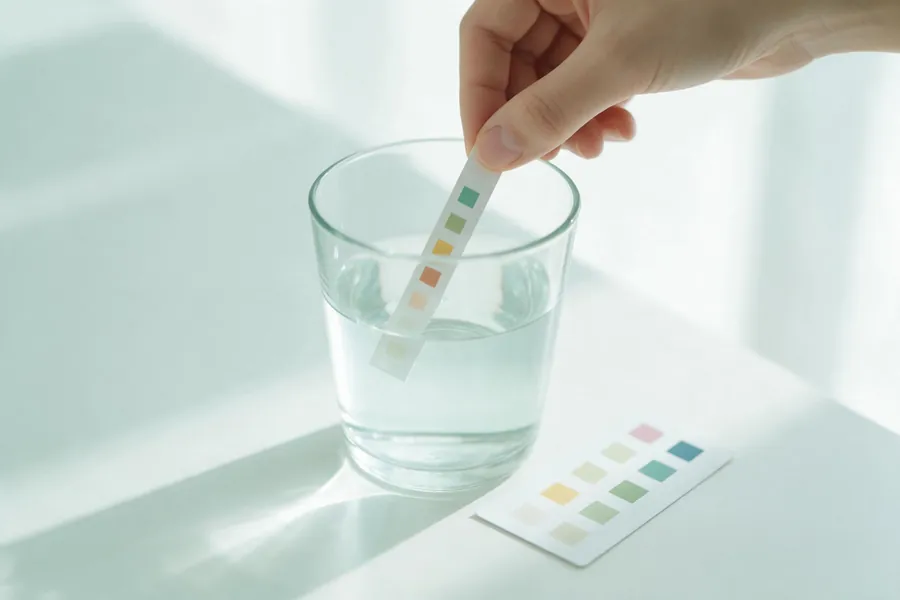
A TDS meter costing a few euros measures the dissolved substances in ppm. Measure the tap water (for example 350) and the pure water (for example 15). If the pure water is under 10 per cent of the tap water value, the membrane is working. If it rises above 15 to 20 per cent, it is exhausted. With a fresh membrane, good systems sit at 2 to 5 per cent. What else the value tells you is covered in Understanding TDS.
Changing filters
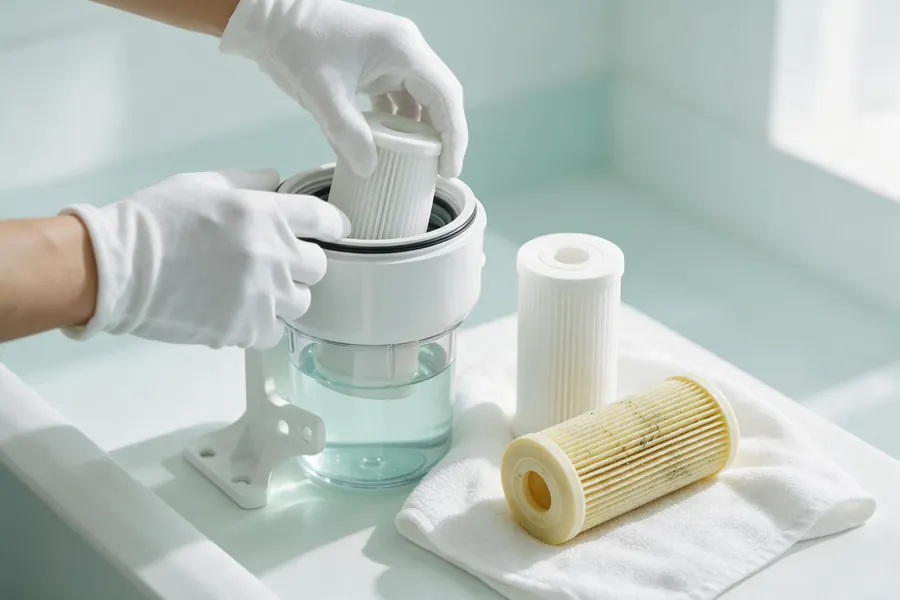
- Close the supply, release the pressure at the tap, and with tank systems close the tank valve.
- Open the filter housing with the housing spanner, take out the old filter and clean the housing with washing-up liquid.
- Insert the new filters with clean hands or gloves and check the seals.
- Open the supply, check for leaks and pour away the first 5 to 10 litres (activated carbon dust).
- Note the date.
Disinfection
Once a year, best at the membrane change: remove the membrane, fill the system with a solution of hydrogen peroxide (3 per cent) or a system disinfectant, leave it to act for 30 minutes and rinse thoroughly. Empty the tank completely in the process. Then fit new filters throughout.
After a holiday or standstill
If the system has stood for more than a week, pour away the first three to five litres, and with tank systems the whole tank. After more than four weeks of standstill, also change the pre-filters. If you are regularly away for long periods, choose a direct-flow system with no tank.
What happens if you do nothing
Clogged pre-filters let chlorine through to the membrane, rejection falls, and biofilm grows in the tank. After two years without maintenance, the system delivers worse water than the tap next to it. The cost of maintenance is covered in Is a reverse osmosis system worth it?
Frequently asked questions
Can I use cheaper replacement filters from other manufacturers?
For standard sizes (10 inch, 2.5 inch) yes. Pay attention to filter fineness and certification marks. With closed cartridge systems you are tied to the manufacturer.
Do I have to change filters even if little water has run through?
Yes, time counts just as much as volume. Activated carbon becomes contaminated with germs even with little flow.
Share