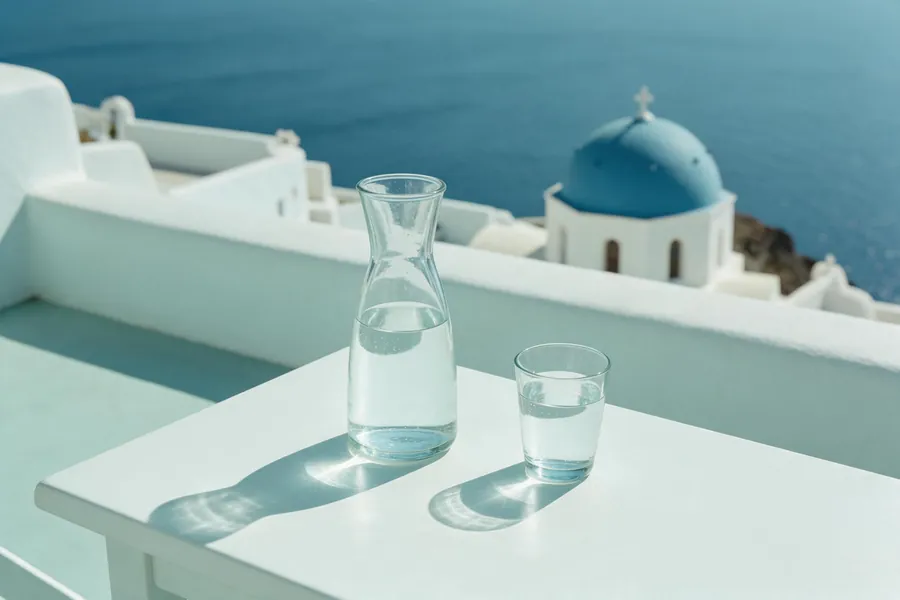

Athens drinks clean water from the Marathon and Mornos reservoirs, and the same goes for Thessaloniki. On most islands, by contrast, the water comes from cisterns, desalination or overloaded wells and is salty, hard and not always safe.
The short answer
Athens and the mainland yes, on many islands only for brushing teeth
Aquaviana’s advice
- Athens, Thessaloniki, the Peloponnese, the towns of Crete: drinkable from the tap.
- Cyclades, Dodecanese, small islands: drink bottled water and use tap water for showering and brushing teeth.
- The half-litre bottle of water at a kiosk has a price cap, so it costs the same everywhere.
Athens
The capital gets its water from four reservoirs up to 200 kilometres away. It is filtered and chlorinated, meets all EU values and tastes good chilled. Thessaloniki, Patras, Ioannina and the larger towns on the mainland are likewise unproblematic. A “do not drink” notice in hotels often refers to the taste or to old house pipes, not to the network.
The islands
Santorini, Mykonos, Paros and many of the Cyclades and Dodecanese islands have too little rain and too many visitors. The water comes from desalination plants and cisterns, or is brought by ship. It is often salty (high chloride content), hard and not consistently approved for drinking. Locals buy bottled water, and tourists should do the same. Crete has a good spring water supply in the north, while in the south and in small villages the same applies as on the Cyclades.
Culture
A glass of cold water traditionally comes with your coffee, usually from a bottle. In restaurants a bottle is brought unasked, while in Athens you can ask for tap water. The state price cap on the 0.5-litre bottle keeps bottled water cheap everywhere.
Frequently asked questions
Are ice cubes safe in Greece?
In restaurants and bars yes, they are made from treated or bottled water. On small islands, ask if in doubt.
Share