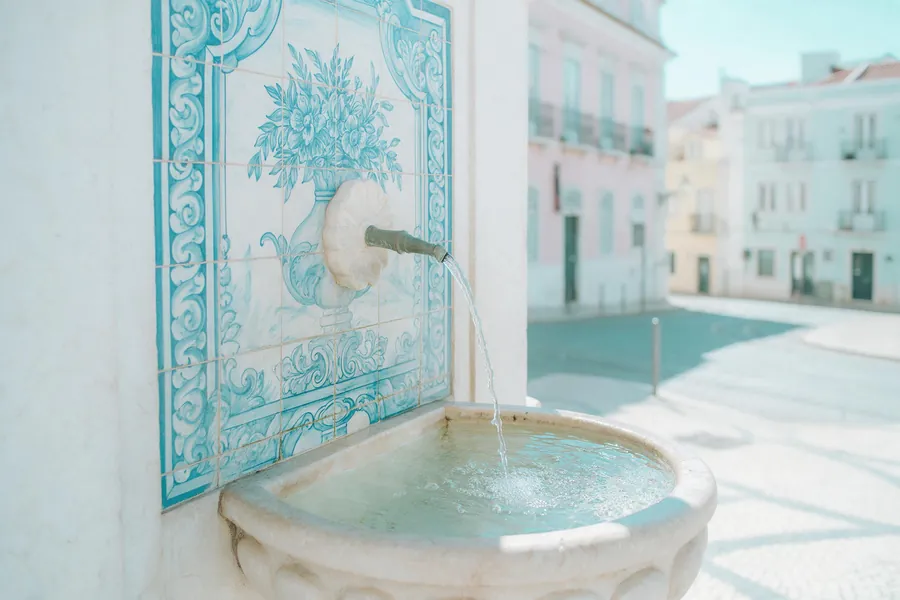

Portugal has renewed its supply network with EU funds since the 1990s. The water is drinkable throughout the country but tastes of chlorine, especially in the south. Locals buy cheap bottled water out of habit.
The short answer
Yes, throughout the country, with a distinct taste of chlorine
Aquaviana’s advice
- Lisbon and Porto: drink without worry, the chlorine fades in the fridge.
- Algarve: drinkable, but hard and heavily chlorinated, so use a filter jug or a bottle for the taste.
- Bottled water in 5-litre containers often costs less than one euro.
Lisbon and Porto
Lisbon draws water from the Castelo do Bode reservoir in the Tagus basin and from groundwater, and Porto from the Douro. Both cities treat the water with chlorine, which you taste mainly in the morning. A jug in the fridge solves the problem in an hour. The hardness is 5 to 12 °dH. Over 98 per cent of samples nationwide meet the EU values, a figure that was only around half that 30 years ago.
The Algarve
The holiday region in the south sits on limestone and has harder water, plus long supply pipes and more chlorine. In dry summers water becomes scarce, which does not reduce the quality but does not push up the prices of bottled water either: they are among the lowest in Europe.
Culture
Portuguese people drink a lot of tap water at home, while in restaurants bottled water is brought, usually without asking. “Água da torneira” on request is no problem. On Madeira and the Azores the water comes from springs and lava rock, and it is soft and very good.
Frequently asked questions
Is the water on Madeira drinkable?
Yes, Madeira has spring water from the mountains, distributed through the levadas (irrigation channels). The tap water is soft and tastes good.
Share