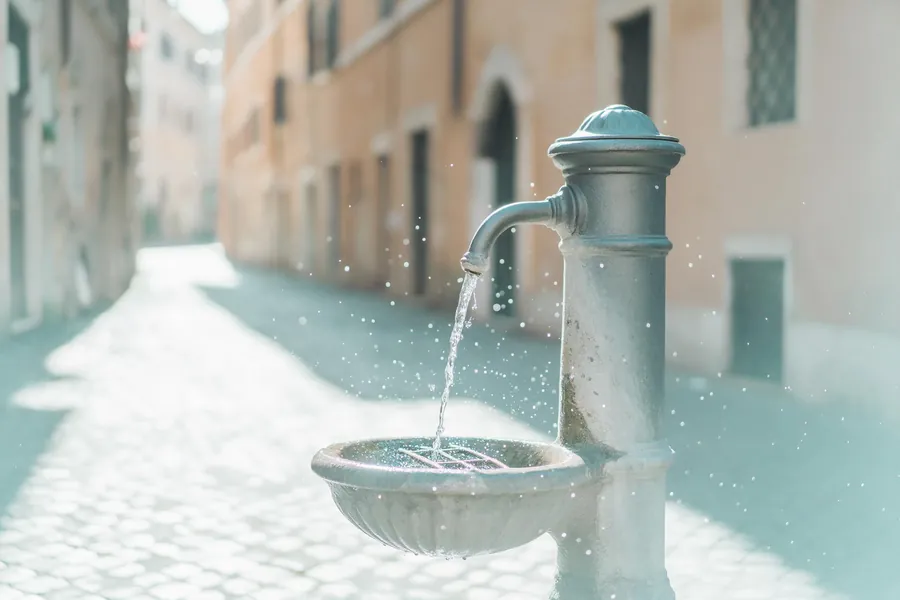

Italy has clean tap water, and the Romans drink it from more than 2,500 fountains, the Nasoni. Even so, Italy is the European champion in bottled water, because water at the table traditionally comes from a bottle.
The short answer
Yes, almost everywhere, exceptions are signposted
Aquaviana’s advice
- “Acqua non potabile” means not drinkable. You will see it at technical taps and on some islands.
- In Rome, use the Nasoni: hold a finger over the spout and the water squirts out of the small hole on top.
- In restaurants ask for “acqua del rubinetto”; in big cities it is increasingly served.
Rome and the Nasoni
Rome has supplied itself from springs in the surrounding area since antiquity, and today through aqueducts that bring water from the Apennines. The cast-iron drinking fountains with the curved “nose” spout run constantly, and their water is cold, hard (around 25 to 30 °dH) and excellent. Milan, Florence and Naples have similar fountains, often marked “acqua potabile”.
Why bottles anyway
Italians drink more than 200 litres of bottled water per head per year, a record in Europe. It is a matter of table culture: a bottle of “naturale” or “frizzante” belongs with a meal, just like bread. Added to that is a mistrust from times when pipes in the south were unreliable, and in the south and on the islands that is still partly true: Sicily, Sardinia and parts of Apulia have supply problems and salty water in dry summers.
Hardness and taste
Central Italy sits on limestone, so the water in Rome, Florence and Umbria is correspondingly hard. Northern Italy with Alpine water (Turin, parts of Milan) is softer. If you do not like the limestone taste, reach for one of the many light Italian mineral waters.
What you should know
In towns and on the mainland, tap water is drinkable unless signposted otherwise. On islands and in remote holiday homes with their own cistern, it is better to ask. The “non potabile” label is binding and means what it says.
Frequently asked questions
Is the water in Venice drinkable?
Yes, Venice gets groundwater from the mainland through pipes. The public fountains in the city carry drinking water.
Share