
The waterworks delivers flawless water, but your house makes the difference. How to recognise lead pipes, when copper becomes a problem, what zinc and nickel from fittings mean and which tests help.
In short
- Lead: possible in houses built before 1973, limit 10 µg/l, replacement compulsory since January 2026.
- Copper: raised in new pipes and in acidic, soft water during the first years.
- Galvanised steel: releases zinc and rust, no health risk, but it affects taste and colour.
- Let stagnant water run off, do a lab test if in doubt, and replace the pipes as the lasting solution.
Lead
Until the 1970s, house connections and risers were laid in lead because it is soft and easy to bend. Lead dissolves slowly into water, especially when the water is standing and when it is soft. It accumulates in the body and damages the development of the nervous system, above all in children. The limit has been 10 micrograms per litre since 2013 and will be 5 from 2028, and from 2026 lead pipes in Germany must be removed completely. Even so, remnants remain, above all in Berlin, Hamburg, Bremen, Saxony and parts of North Rhine-Westphalia.
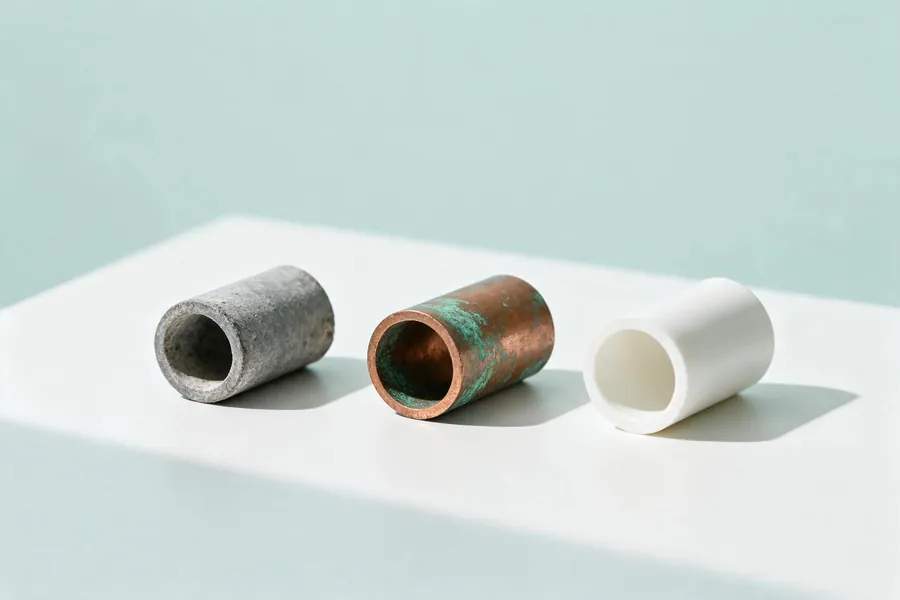
How to recognise them: lead pipes are dull grey and soft, can be scratched with a fingernail or a knife, often have bulging soldered joints and sound dull when you tap them. Typical places: the cellar at the house connection, behind the water meter. What to do: inform the landlord or owner, have a lab test done (a stagnation sample after 4 hours of standing), let the water run off before drinking until the pipes are replaced, and use bottled water for baby food.
Copper
Copper has been the standard since the 1970s and is generally unproblematic. There are two exceptions: new pipes in their first years, before a protective layer has formed, and soft, acidic water with a pH below 7, which dissolves copper. The limit is 2 mg/l. Too much copper tastes metallic, turns hair greenish and causes stomach and bowel complaints in infants. If you see blue-green stains in the washbasin and a metallic taste in the morning, let the water run off and test it. Where the water is permanently acidic, plastic pipes are the solution.
Galvanised steel
Found in many houses from the 1950s to the 1980s. The zinc layer protects the steel but dissolves slowly. After that the pipe rusts from the inside, the water turns brownish and tastes metallic, and the flow rate drops. Zinc is harmless to health, and so is rust, but the pipes are at the end of their life and should be replaced.
Fittings and nickel
Chrome-plated fittings contain nickel, which can pass into the water in the first seconds, especially with cheap products. The limit is 20 µg/l. So take your first sips not from a standing tap but let it run briefly first. When buying, look for drinking water approval (the DVGW mark, from the German Technical and Scientific Association for Gas and Water).
Plastic
PE-X, PP and composite pipes are the standard today, release no metals and are unproblematic when laid correctly. Taste issues in the first weeks disappear with flushing.
Testing
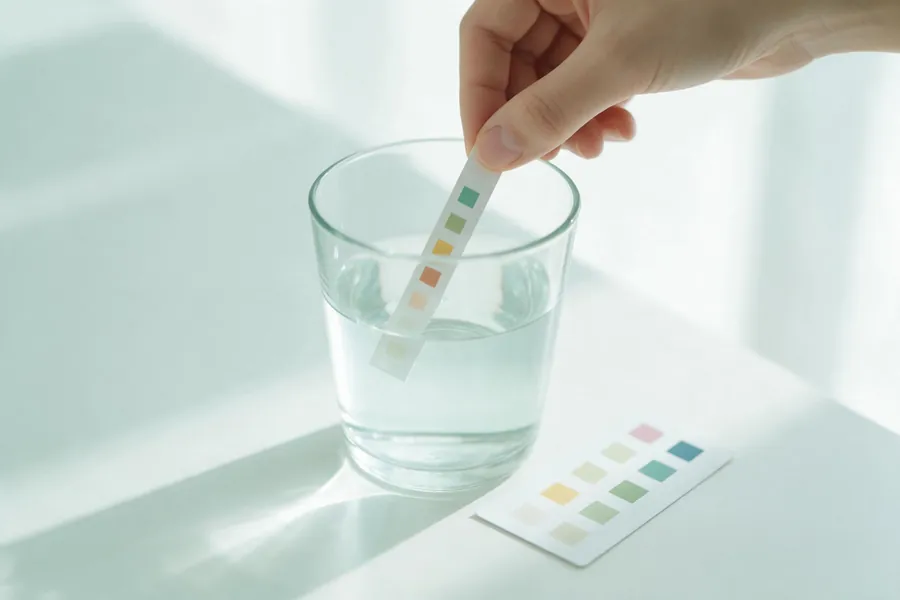
Lab tests for lead, copper, nickel and zinc are available from 30 to 60 euros: take one sample in the morning before the first use of the tap (stagnation) and a second after letting the water run for two minutes. Comparing the two shows whether the problem is in the house. What test strips can and cannot do is covered in the article Testing water at home. If you want to remove the metals reliably, you will find the answer in the chapter Reverse osmosis.
Try it out
Tap water checkEight questions about your home, pipes and region, an assessment with a traffic light and next steps.Reverse osmosis calculatorSystem, filters and wastewater against bottled water: cost per litre and payback in months.Frequently asked questions
Does a countertop filter help against lead?
Only if it is certified for it. Some cartridges with an ion exchanger reduce lead, but the effect fades. Reverse osmosis and replacing the pipe are the safe options.
Does the landlord have to replace lead pipes?
Yes. Drinking water with lead above the limit is a defect, and the tenant can demand replacement and, until then, a rent reduction. Involving the health authority (Gesundheitsamt) helps.
Share